Are you a Reseller? Log in to your account and unlock low prices and B2B discounts.
Log in
Log in.
Blog

Sublimation, screen printing, heat transfer or deep-weave — which lanyard branding technique should you choose?

Sublimation, screen printing, heat transfer or weaving? See how the choice of branding technique affects the look and durability of a promotional lanyard. Expert guide.

Table of contents

The choice of lanyard branding technique has a major impact on how the finished product looks. Companies often begin by asking for the “best method”, although the real question is which method suits a specific design. The same lanyard can create a completely different effect depending on whether you choose sublimation, screen printing, heat transfer or weaving. The differences are not only about colours and detail, but also durability, touch and the overall perception of the lanyard. What’s more: not every design looks good in every technique, so which lanyard branding technique to choose should come directly from the artwork itself.

In this article, TedGifted experts compare the most important lanyard branding techniques listed above — sublimation, screen printing, heat transfer and deep-weave — and show when each one will be the best choice. Remember that branding promotional lanyards is a separate stage in the buying process, so here we focus only on choosing the branding method. Lanyard materials, artwork preparation, industry terminology and pricing are covered in other articles on our blog.

Where should you start when choosing a lanyard branding technique?

Start choosing the lanyard branding technique by analysing the artwork first. Define the exact number of colours, the level of detail and the desired tactile effect, and only then select the most suitable printing or weaving method.

Start choosing the branding technique with a simple rule: first analyse the artwork and the desired effect, then choose the technology. Before selecting a method, make sure you know exactly what the project requires. The technique should support the design, not force compromises on it. To make the right decision, analyse your logo and ask yourself three key questions.

Is the design simple or full colour?

The most important point is how many colours are used in the design. Is the file a simple 1–2 colour logo, or a more complex full-colour graphic? The answer will let you quickly separate techniques created for simple artwork from those that can handle every shade.

Does the artwork include fine details, shadows or photos?

The next filter is the level of detail. Not every technique reproduces complex and delicate elements well. Check whether your design includes subtle shadows, gradients, very small details or realistic photos. If it does, you need a precise branding method that can faithfully reproduce tonal transitions.

What effect do you want: smooth, classic or woven?

Finally, consider the desired character of the lanyard. The printing technique can change how the tape looks and feels. Think about whether you want a modern, perfectly smooth finish, a bold and classic surface print, or perhaps a premium, textured woven effect. The better you define the artwork and the desired result, the easier it will be to choose the branding technology that truly fits the brief.

Sublimation on lanyards — when is it the best choice?

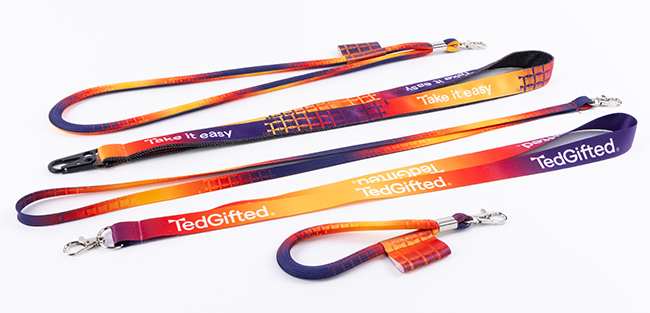
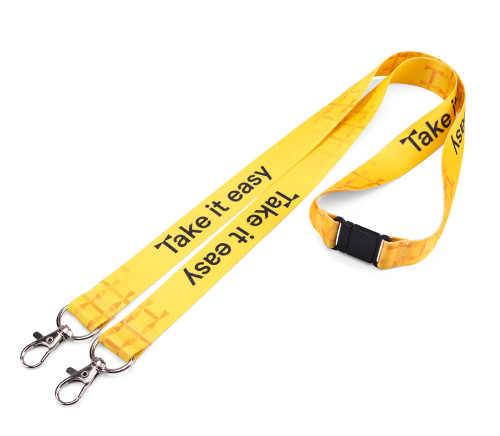
Sublimation is the best choice when your lanyard design is full colour, includes photorealistic images, smooth gradients or requires very precise reproduction of complex detail. It is produced on white polyester tape.

When choosing sublimation, remember that this technique was made for designs that do not accept graphic compromises. Sublimation on lanyards is the optimal solution mainly when the design contains many colours, plenty of detail or gentle tonal transitions. It is an ideal solution for companies looking for maximum design freedom.

When does sublimation give the best result?

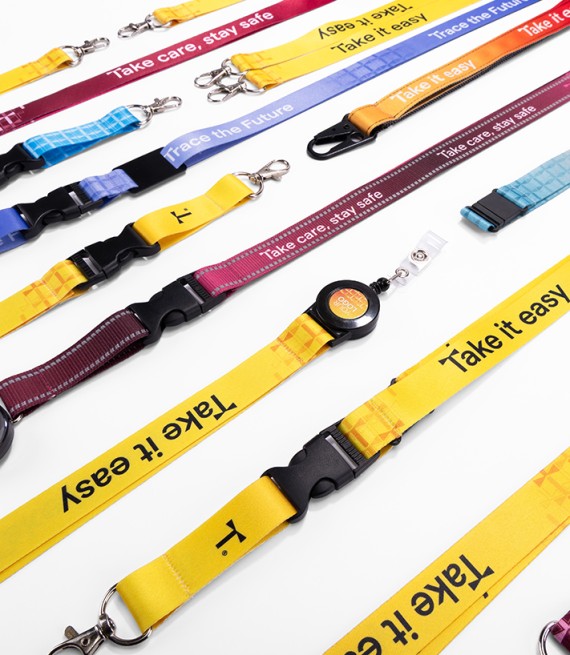
his technique makes the most sense when your artwork is visually demanding. A full-colour promotional lanyard made with this method allows highly accurate reproduction of complex concepts, realistic photos, multicoloured backgrounds and subtle shadows. Sublimation gives designers a great deal of creative freedom.

We see this in practice every day. If you are producing lanyards for a large gaming event, music festival or IT conference, and the tape needs to carry multicoloured logos from ten different sponsors set against a background with tonal transitions, sublimation is often the only method that can truly handle the job.

The biggest advantages of sublimation on lanyards

Sublimation lanyards are among the most frequently ordered promotional items, and their popularity comes from excellent user performance. The main strengths of this technology are photographic detail, very high print durability and vivid, saturated colours. Another major advantage is the clean finish — sublimation print on a lanyard becomes part of the material structure, so it is completely undetectable to the touch and leaves a perfectly smooth surface.

When is it better to choose another technique?

Despite its enormous capabilities, this technique is not always the only right answer. If you only want to apply one very simple logo to the tape and you want a strong, matte contrast between ink and substrate, full photographic freedom may be unnecessary. Not every lanyard needs a full-colour, complex design — for simpler markings, screen printing works very well. Another point is the material. Sublimation print is applied to polyester tape, usually on a light or white base. If you are ordering lanyards made from other materials, choose an alternative branding method.

Screen printing on lanyards — when does it work best?

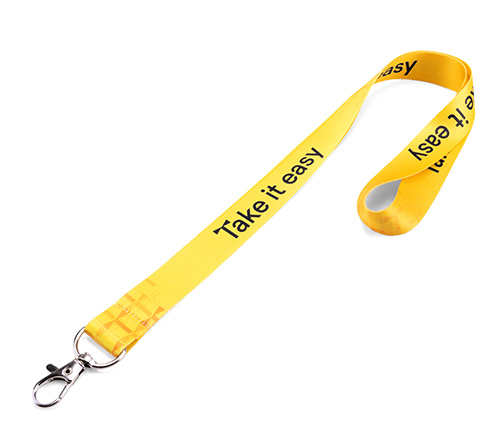
Screen printing on lanyards is ideal for simple logos, clear lettering and minimalist graphics based on no more than 1–2 solid colours, without shading.

Screen printing on lanyards is the essence of classic, durable branding. Where sublimation loves multicoloured ambition, screen printing focuses on order, strong contrast and dependable craftsmanship. That is why it has enjoyed lasting trust in the promotional industry for years, delivering highly attractive and repeatable results.

Custom printing services on polyester webbing and promotional lanyards for printing houses and trade printers by TedGifted, the lanyard manufacturer.

When is screen printing better than sublimation?

When deciding between sublimation or screen printing, you need to look at your logo. Consider screen printing if the design is minimalist and does not require many colours or tonal transitions. When should you choose screen printing with confidence? When you are applying simple brand marks, readable text or graphics based on 1–2 solid colours. A simple logo on a lanyard looks highly professional in this technique, and the limited colour palette actually strengthens the message. Our experience at TedGifted shows that this technology remains a firm favourite among law firms, banks and public institutions. In these projects, seriousness, maximum contrast and consistency across thousands of lanyards matter more than a spectacular burst of colour.

Trade-only promotional lanyards custom printed for advertising agencies and distributors by TedGifted lanyard manufacturer.

What does screen printing look like on a lanyard?

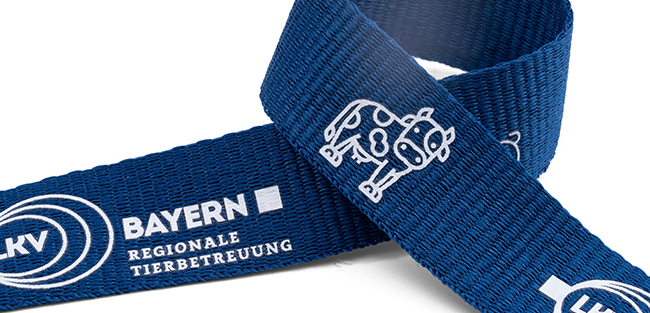
With this method, the result is structured and highly attractive, making it a strong match for classic promotional items. Unlike sublimation, screen printing ink forms a thin, slightly tactile layer on the tape. It delivers excellent contrast, rich colours and the traditional look that many brands still want. High-quality screen-printed lanyards also stand out for their strong print durability in everyday use.

Screen printing limits with more complex artwork

If the artwork is more complex and includes subtle shadows or lots of detail, another available technology may be better. Screen printing cannot reproduce gradients, and precisely layering many tiny multicoloured dots is often physically impossible in this method.

Heat transfer on lanyards — when is it worth considering?

Heat transfer, on lanyards is the optimal choice when your design requires very precise reproduction of small details, perfect coverage and a sharp separation of colour from the tape, which traditional screen printing may struggle to achieve, but there is no need to go as far as full-colour sublimation.

When analysing the value of heat transfer printing, you should know first of all that this technology allows very precise branding. Heat transfer on lanyards is used where you want an attractive finish on medium-complexity designs and very fine edges.

Comparison of two rPET reflective lanyard straps from the Reflect collection: T16 strap with woven reflective thread and a strap with a seamless heat-applied reflective stripe.

How does heat transfer differ from sublimation and screen printing?

In the promotional products industry, heat transfer on lanyards often functions as a separate practical solution. The question of heat transfer print or sublimation is easiest to answer by looking at how each method works. In sublimation, the dye permanently bonds with the fibre, giving smooth branding and freedom in the number of colours. In heat transfer, the design is thermally bonded to the surface. Compared with screen printing, heat transfer is excellent at handling the smallest elements and is often used where screen printing would not keep small lettering sharp enough.

Trade-only promotional lanyards custom printed for advertising agencies and distributors by TedGifted lanyard manufacturer.

When is heat transfer a good choice?

This is a technique best judged through the lens of the specific design and the desired print result. Choose heat transfer lanyards when the project requires perfect coverage, has very precise detail, but does not need a full-colour photographic background. Heat transfer works best when you need a sharp colour edge on a complex logo shape, something traditional screen printing may struggle with.

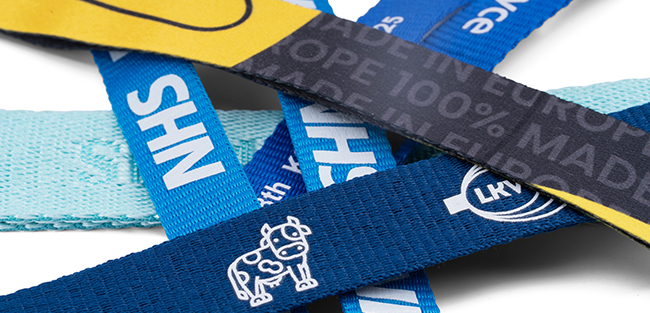
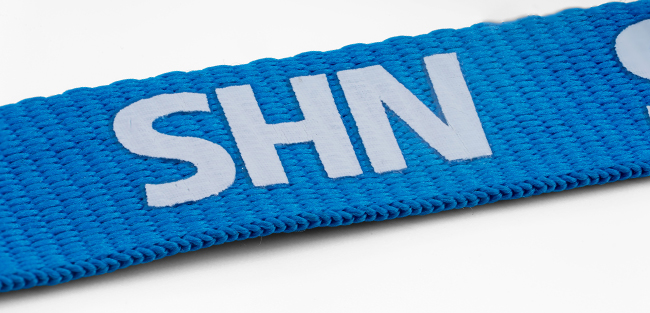
Primer plano que muestra la alta calidad de la impresión por sublimación y la textura duradera de la cinta de un lanyard promocional corto de TedGifted.

Which projects may not suit heat transfer?

If you want to print a photo on the lanyard, or add edge-to-edge tonal transitions, heat transfer is not the best direction. Likewise, if your brand aims for a very raw, strongly textured effect, a thermally applied graphic layer may not match the visual brief.

Which lanyard branding technique works for a specific type of artwork?

This should be the most important decision in the whole process. Instead of starting with the machine, analyse the type of artwork first. Let’s see which lanyard print technique is best depending on the project you want to produce.

Simple logo in 1–2 colours

If the design is based on a simple logo and a small number of colours, the best choice is usually a technique that reproduces a clear, structured mark well. In this case, there is no point choosing a method designed for large, full-colour compositions. Which lanyard branding technique for a logo is the most suitable in its basic version? Screen printing or classic weaving will work very well, giving strong contrast. The key is that the branding technology should not be more complex than the design itself. In short: if you only need to print a black symbol and a company name, running a full-colour sublimation machine would simply be overkill.

Design with fine details

When tiny letters, thin lines or precise icons are involved, you need fine details on a lanyard reproduced with complete sharpness. In this situation, heat transfer or sublimation works best. Methods based on weaving can lose the edges of the smallest elements, making the message unreadable.

Close-up of a red rPET reflective lanyard with custom printing, featuring a sewn-on reflective stripe for night safety.

Full-colour artwork

When a brand needs a carrier for many shades, sublimation is the clear winner. A rich full-colour lanyard requires a method that can smoothly layer any number of colours. Screen printing and weaving cannot handle an unlimited palette, so choosing them for this type of project would be a mistake. With sublimation, you can reproduce even a photo, and the print will look photorealistic.

Gradients, shadows and photos

The presence of tonal transitions or photos on a lanyard immediately narrows the field. In such cases, the technique that handles smooth shadow transitions and photographic depth best is sublimation.

A project where a premium feel or strong texture matters

There are situations where the prestige of the item matters more than the graphic itself. If you want to create a unique lanyard with a woven logo, go for classic weaving. No print, however precise, can match the crafted, textured character created by properly interlaced yarn. If you want a top-class product, it is worth choosing so-called deep-weave.
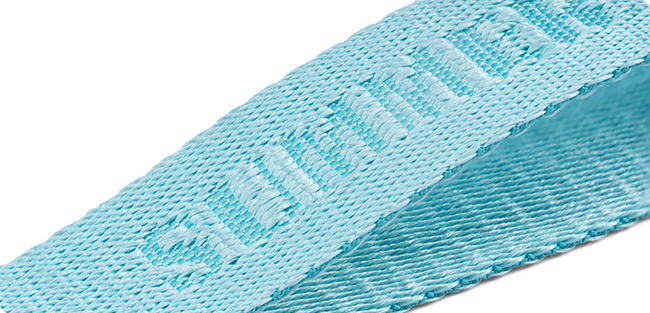
This advanced technique involves weaving a dense nylon tape in such a way that the logo is formed directly from the yarn layout, creating an elegant, recessed three-dimensional effect that resembles premium embossing. It delivers exceptional branding durability — after all, an interwoven logo does not wear off — while also giving the lanyard a discreet, businesslike look. This technique works brilliantly for simple, strong logos, especially for executive use, business events or VIP gifts.

How does branding technique affect the look, feel and durability of a lanyard?

The choice of branding technique affects not only the design itself, but also how the lanyard looks and feels. In practice, this detail often decides whether the finished product matches the brand’s expectations.

How does the artwork appear on a lanyard?

Each method gives the tape a different character. The print effect on a lanyard can feel modern and light, but it can also look classic or even slightly “material-like”, with a subtle texture. The final printed look of a lanyard depends heavily on whether the colourant sinks into the base or sits on top of it.
Which technique gives a smoother finish?

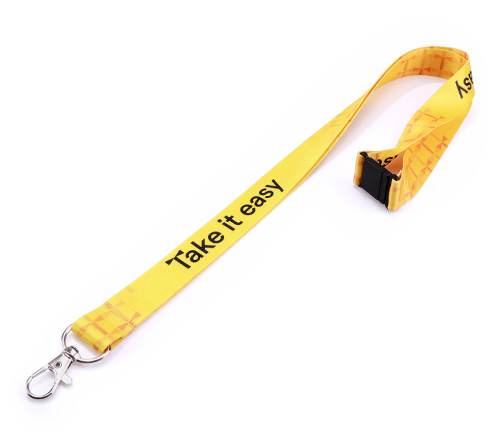
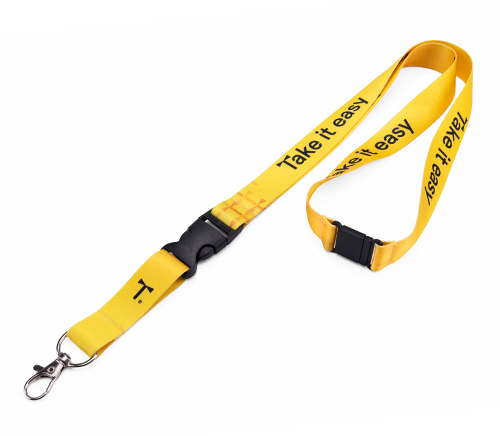
Some methods create a smoother, more modern finish, while others look more traditional. The main differences come down to the finish:

  • Sublimation gives maximum lightness and a perfectly smooth tape — the colour is completely undetectable.
  • Screen printing and heat transfer, on the other hand, leave a layer on the surface of the tape that can be felt under the fingers.

When does construction texture matter?

When asking which branding technique is the most durable, you must remember the physical properties of the tape itself. The most durable results come from sublimation and weaving. Other techniques build a thin but noticeable structure on the surface of the tape. In sublimation printing, the dye penetrates directly into the polyester fibres. Weaving, meanwhile, offers near-lifetime durability because the logo is created directly by interlaced yarn and becomes an integral part of the lanyard material.

The most common mistakes when choosing a lanyard branding technique

Even the best design can be spoiled by the wrong production decision. Here are the most important mistakes when choosing a lanyard branding technique that appear regularly in quotation requests:

  • Choosing a technique out of habit, not for the design
    One common mistake is choosing a technique simply because it has been used before. As a result, the entire design and visual idea would have to adapt to the method, rather than the other way around. To avoid this, first assess the artwork and only then compare the available options.
  • Expecting too much from a simple method
    A frequent issue is expecting a photographic effect from a method not designed for it. Choosing a print method for a lanyard should always involve an awareness of the limits of the selected option, such as the fact that screen printing will not magically create a multicoloured background on demand — and confusing those expectations is the fastest route to disappointment when the box is opened.
  • Confusing woven effects with print
    Some companies order logo weaving while expecting a standard high-resolution print. Confusing weaving with printing leads to disappointment, because interlacing yarn will not reproduce the smooth, photographic shadows seen in computer files. It sounds obvious, yet it remains one of the reasons for complaints in the promotional industry.
  • Combining too many decisions in one step
    Are you wondering how to choose a lanyard branding technique without making an expensive mistake? The worst thing you could do is mix decisions about technology with decisions about material choice, artwork preparation and budget. The best lanyard branding technique is not the most popular one, but the one that fits the artwork and the expected result best.

Checklist — how to choose a lanyard branding technique before ordering?

The lanyard branding checklist below will help you organise your expectations quickly. Before you send an enquiry, go through these quick control points:

  • Is the design simple or full colour?
  • Does the artwork include fine details, shadows or gradients?
  • Do you want a smooth print, a classic effect or the texture of a woven logo?
  • Does the technique support the design, or does it limit it?
  • Do you want maximum creative freedom, or a more structured result?
  • Are you trying to solve a design or material problem with the technique?
  • Will the finished effect be consistent with the character of the brand?

Which lanyard branding technique is the most durable?

The most durable methods are those that bond permanently with the fibre. Weaving offers very high abrasion resistance because the mark is physically created by the material itself. Sublimation also has exceptional lifespan, because the dye becomes part of the yarn.

Is sublimation better than screen printing on lanyards?

It depends mainly on the nature of the project. If the artwork is complex and full colour, methods with greater reproduction freedom usually perform better. If the logo is simple and orderly, a solution focused less on complex graphics and more on clarity often gives the better result.

When should you choose heat transfer on a lanyard?

Heat transfer is an excellent choice when you want solid coverage and a very clear separation between the ink edge and the tape. It is ideal for graphics with a medium amount of detail, especially when you need much greater precision in small marks than standard screen printing can offer.

Is deep-weave suitable for every logo?

Definitely not. Weaving is a technique that requires a degree of minimalism in the design. It works best for compact, bolder logos without shading or fine decoration. You need to remember that yarn is a dimensional material — the loom will not preserve photographic edge sharpness when the design contains microscopic fonts or very dense, complex detail. This becomes even more important with deep-weave. Because this exclusive technology uses a dense, thick nylon tape and forms the logo as a recessed, three-dimensional structure, the graphic must be even more distinct. Too-thin lines or delicate letters will simply disappear into the weave and will not create the desired elegant, embossed effect. That is why deep-weave is the clear favourite for bold, simple company marks and strong typography, with any unnecessary detail removed.

Which technique works best for full-colour artwork?

Sublimation is the best option for full colour. The dye permanently penetrates the fibre, which allows crisp and reliable reproduction of detail. It captures photo depth, blends tones smoothly and applies complex imagery across the entire lanyard surface.

What should you choose for a simple company logo: screen printing, transfer or deep-weave?

For projects based on 1–2 core colours, the choice depends on the style you want to project. Screen printing gives a crafted, high-contrast look, heat transfer offers precise detail reproduction, and weaving raises the visual value of the lanyard by adding a luxurious texture.

Does the branding technique affect the look and feel of the lanyard?

Yes, it is absolutely crucial and it determines the final perception of the item. Sublimation gives a smooth, velvety texture because the colour sinks into the tape structure and cannot be felt. Screen printing gives the effect of ink integrated with the material, but still subtly noticeable under the fingers. Heat transfer, by contrast, creates a distinct extra layer on the lanyard surface. The design is pressed into the tape under high temperature, making the print very smooth and giving it the feel of a soft, slightly rubber-like coating.

How do you avoid confusing the choice of technique with the choice of lanyard material?

The golden rule in the promotional products industry is: do not mix these two decisions at the same stage. First define the lanyard itself, for example whether it should be smooth polyester or cotton, and only then, using the guidance in this article, choose the branding technology that fits the artwork and desired effect.

Lanyard branding techniques at a glance

Technique

Best for:

Visual and tactile effect

Main limitation

Sublimation

Full-colour graphics, photos, fine details and smooth gradients.

Dye becomes part of the fibre, leaving a perfectly smooth tape.

Unnecessary for simple one-colour marks, although technically possible.

Nylon

Smooth structure, subtle sheen, premium feel

Premium material

Campaigns targeting discerning recipients, VIP client events

Screen printing

Simple logos, 1–2 colour designs, readable text and structured marks.

Classic look, strong contrast, ink slightly noticeable to the touch.

Cannot reproduce gradients or photographs.

Heat transfer

Logos with a medium level of detail that need very precise edges.

Thermally bonded layer on the surface, excellent visual separation between colour and tape.

Not suitable for smooth edge-to-edge prints.

Weaving

Minimalist, bold logos, thick typography and simple, strong graphics.

Design formed from woven yarn with a premium texture, fully integrated into the tape and highly abrasion resistant.

Cannot reproduce gradients, tonal transitions or very fine, delicate detail.

Closing thoughts

Start choosing the lanyard branding technique not with the method, but with the artwork and the desired result. The design itself will tell you whether sublimation, screen printing, heat transfer or deep-weave is the better route. Sublimation is the best option for complex, full-colour and detailed projects. Screen printing is ideal for simpler, readable marks, while heat transfer is indispensable when you need exceptionally sharp edges on finer details. The more consciously you match the technique to the logo, number of colours and character of the lanyard, the greater the chance of a consistent and attractive final result. Ultimately, when deciding which lanyard branding technique to choose, remember that the best decision is the one where technology supports the design rather than forcing the design to compromise.

Back to blog
×
×
× Download movie